
Little Feelings. Big Conversations.
Every child deserves to feel heard. Little Feelings provides simple, engaging resources that help children recognize emotions, find words for what they’re experiencing, and build healthy communication skills.
happy sad angry worried calm excited lonely proud








The idea
Useful to any child, in any family
Little Feelings grew out of our work with co-parenting families, but it is not about custody. A child who can say “I feel left out” instead of slamming a door is better off in any household, of any shape.
The collection exists to help children develop four things: emotional literacy, self-awareness, healthy communication, and coping skills that match their age.
The resources are deliberately low-pressure. A page at a time, no right answers, and permission printed on the page to skip anything that feels like too much today.
Available now
What you can download today
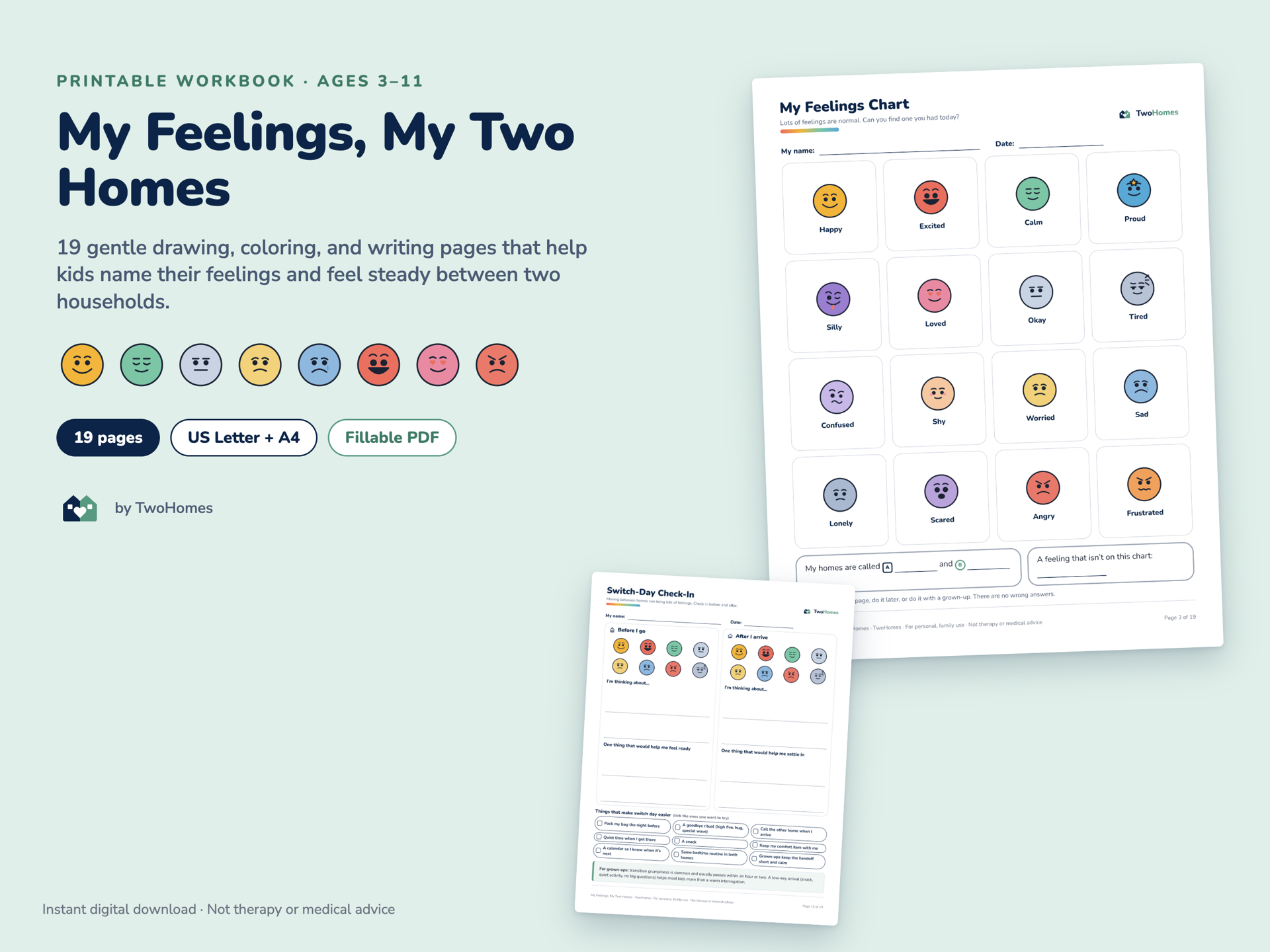
One complete workbook, with nineteen pages covering most of the themes below.
Inside My Feelings, My Two Homes
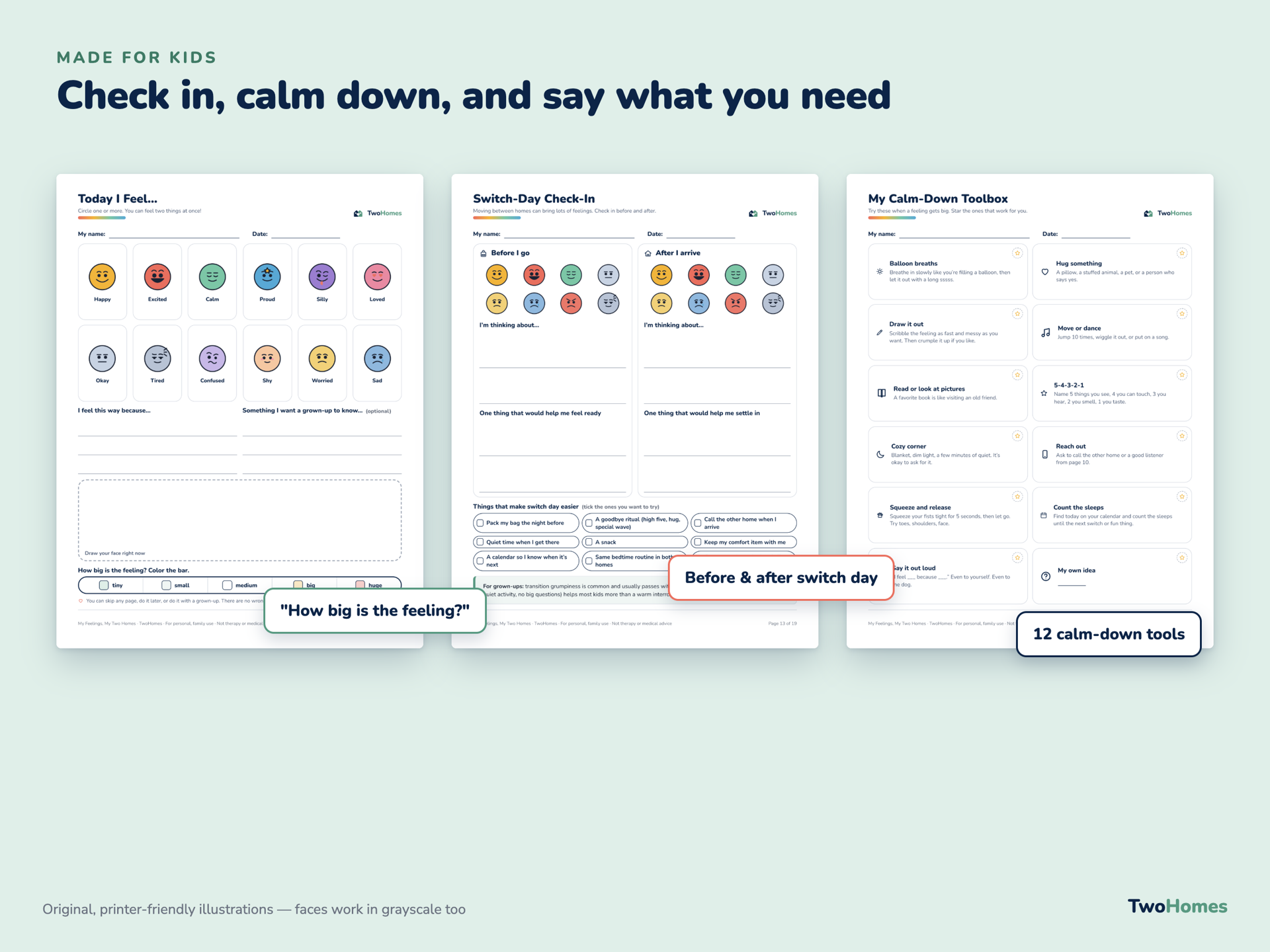
A sixteen-face feelings chart, daily check-ins with a how-big-is-it bar, a twelve-tool calm-down toolbox, conversation starters for grown-ups, a reusable tracker, and separate versions for ages 3–5 and 9–11.
The six themes
Where the collection is going
Each theme below says exactly what exists today and what is still in design. Nothing here is for sale unless it is finished.
How Do I Feel Today?
Daily feelings check-ins and emotional identification.
Available todayAvailable today inside My Feelings, My Two Homes — the “Today I Feel…” check-in with a how-big-is-the-feeling bar, plus a reusable two-week tracker.
Name That Feeling!
Emotion vocabulary cards and learning activities.
In designThe sixteen-face feelings chart is available today. A stand-alone vocabulary card set is in design.
My Calm-Down Toolbox
Age-appropriate coping and calming activities.
Available todayAvailable today as a twelve-tool toolbox page. A larger stand-alone deck is in design.
Let’s Talk About It
Parent–child conversation cards.
Available todayAvailable today as the Conversation Starters page for grown-ups.
Where Do I Feel It?
Body awareness and emotional sensation worksheets.
In designNot built yet. “What Helps When I’m Sad” and “Things That Help Me Feel Safe” cover nearby ground today.
My Voice Matters
Healthy boundaries, asking for help, and expressing needs.
In designIn design. “People I Can Talk To” covers part of this today.


What every page reinforces
Eight things we never contradict
- Every feeling is valid.
- Children can feel more than one thing at the same time.
- No child should be ashamed of an emotion.
- Feelings and behavior are different things.
- There are safe ways to express even the hardest feelings.
- Grown-ups should listen before fixing or dismissing.
- A child can always choose not to answer.
- Emotional development is slow learning, not a test.
For caregivers
How to actually use these
- 1
Read the grown-ups page first
Two minutes. It covers what to say, what to avoid, and why some of the pages are worded the way they are.
- 2
Let the child choose the page
One page at a time is plenty. A workbook finished in a week is usually a workbook an adult drove.
- 3
Be curious, not corrective
“Tell me about your drawing” gets further than “why do you feel that?” Resist the urge to reframe or reassure too fast.
- 4
Let them skip things
A child declining to answer is information too, and it is explicitly allowed on the pages themselves.
- 5
Come back to it
Reprint the check-ins and the tracker. Feelings change; a snapshot from March is not a verdict.
This is not therapy
Feelings are not behavior
Designed to print anywhere
Start with one page
You do not need the whole collection to begin. One check-in at bedtime is a start.