
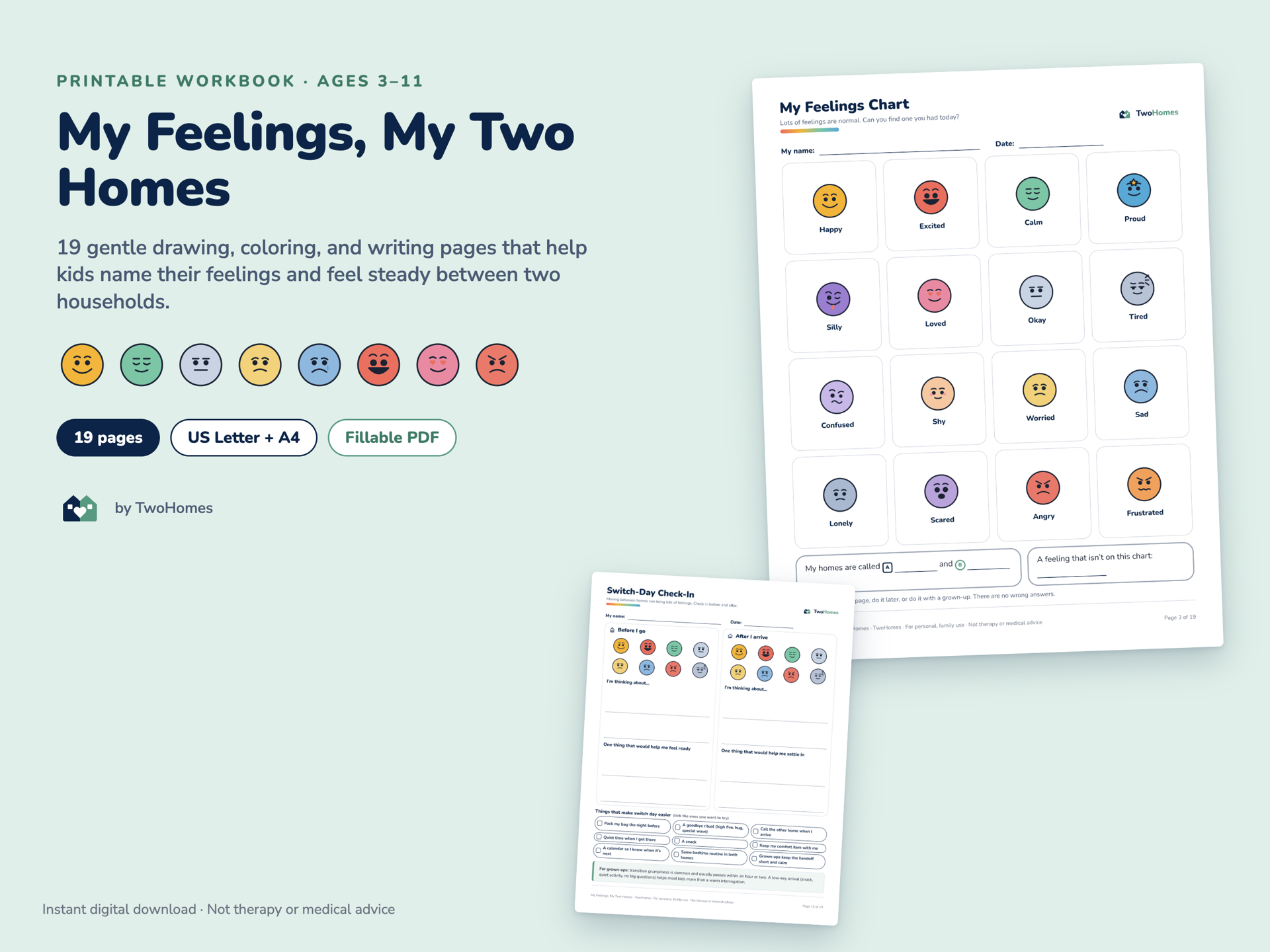
My Feelings, My Two Homes
A gentle feelings workbook for kids who live between two households
- Who it’s for
- Children (set up by a grown-up)
- Age range
- Ages 3–11, with younger (3–5) and older (9–11) versions
- Formats
- PDF · Fillable PDF
$6.99
One-time purchase · instant digital download
Direct purchase is not open yet
- US Letter and A4 included
- Fillable PDF versions
- Print as often as you like for your own household
An activity resource, not therapy. This is a family activity resource. It is not therapy, counseling or medical advice and does not replace a child therapist or pediatrician. If you are worried about your child, please reach out to a professional.
Digital download. Nothing is shipped. Files are delivered digitally. Colors may vary slightly between screens and printers.
Personal, family use. Print as often as you like for your own household or households. Not for resale, redistribution, or use in classroom or clinical products.
About this resource
What it is
Kids do not always have words for what they feel on switch day, or when they miss the other parent, or when everything is just… a lot. These nineteen pages give them the words, and give you a calm way in.
The workbook opens with a two-minute guide for grown-ups — what to say, what to avoid — then hands the pages to the child. Nothing pressures them: “you can skip any page” is printed on the pages themselves. Two homes are never compared, and nothing suggests grown-up problems are a child’s to solve.
Younger and older versions of the core pages are both included, so the same workbook works for a three-year-old pointing at a face and an eleven-year-old writing in a journal.
Why it helps
- Gives a child vocabulary for feelings they cannot yet name.
- Gives you an opening that is not “so, how are you feeling about the divorce?”
- Normalizes missing the other home without either parent being cast as the problem.
Topics
- Feelings check-ins
- Emotional vocabulary
- Calming strategies
- Communication skills
- Parent–child conversations
- Transition activities
What’s inside
- For the Grown-Ups — how to use it, what to say, what to avoid
- My Feelings Chart — sixteen original feelings faces that also work in grayscale
- Today I Feel… — a check-in with a “how big is the feeling” bar
- Draw Your Feelings · Things That Make Me Happy · Things I Miss · Things That Help Me Feel Safe
- My Favorite Things at Each Home — explicitly never a contest
- People I Can Talk To, and What Helps When I’m Sad with a three-step feel-better plan
- Switch-Day Check-In — before and after
- My Calm-Down Toolbox — twelve coping activities
- Conversation Starters for parents, and a reusable two-week Feelings Tracker
- Big-face version for ages 3–5, journal version for ages 9–11, and a closing certificate page
Files you receive
My Feelings, My Two Homes — US Letter
19 pages
My Feelings, My Two Homes — A4
19 pages
- Fillable PDF
Fillable workbook — US Letter
410 form fields
- Fillable PDF
Fillable workbook — A4
Start Here sheet
Printing and usage
- Read “For the Grown-Ups” first — it takes two minutes.
- Let your child pick a page. One at a time is plenty.
- Be curious, not corrective: “tell me about your drawing” works better than “why do you feel that?”
- Reprint the tracker and check-in pages as often as you like.
Also available in a bundle
Buying more than one?
This resource is part of the bundles below, which work out cheaper than buying each product on its own.
 Bundle
Bundles
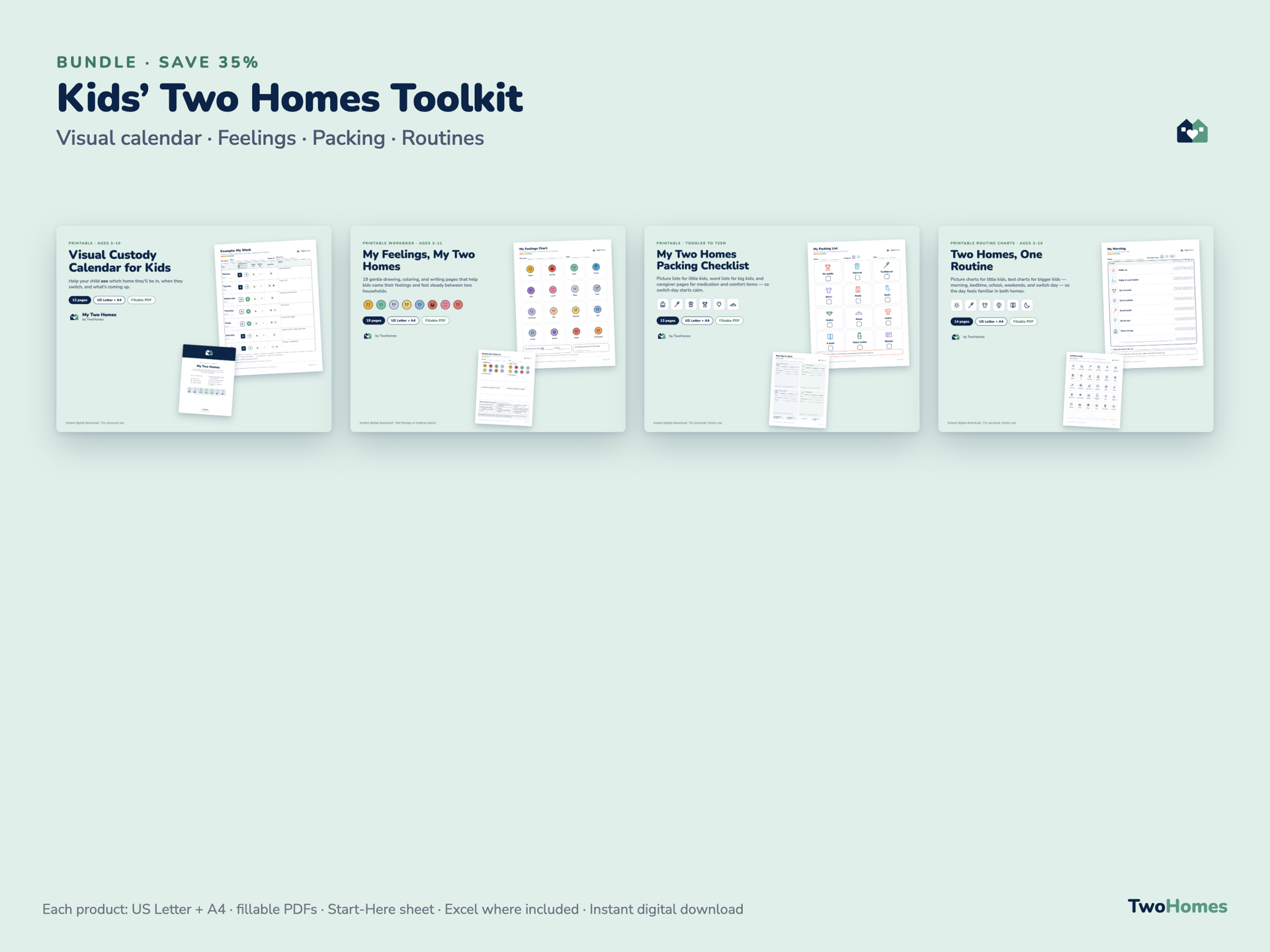
Kids’ Two Homes Toolkit
The visual custody calendar, feelings workbook, packing checklists and routine charts — all four children’s products together.
- Fillable PDF
$16.99View details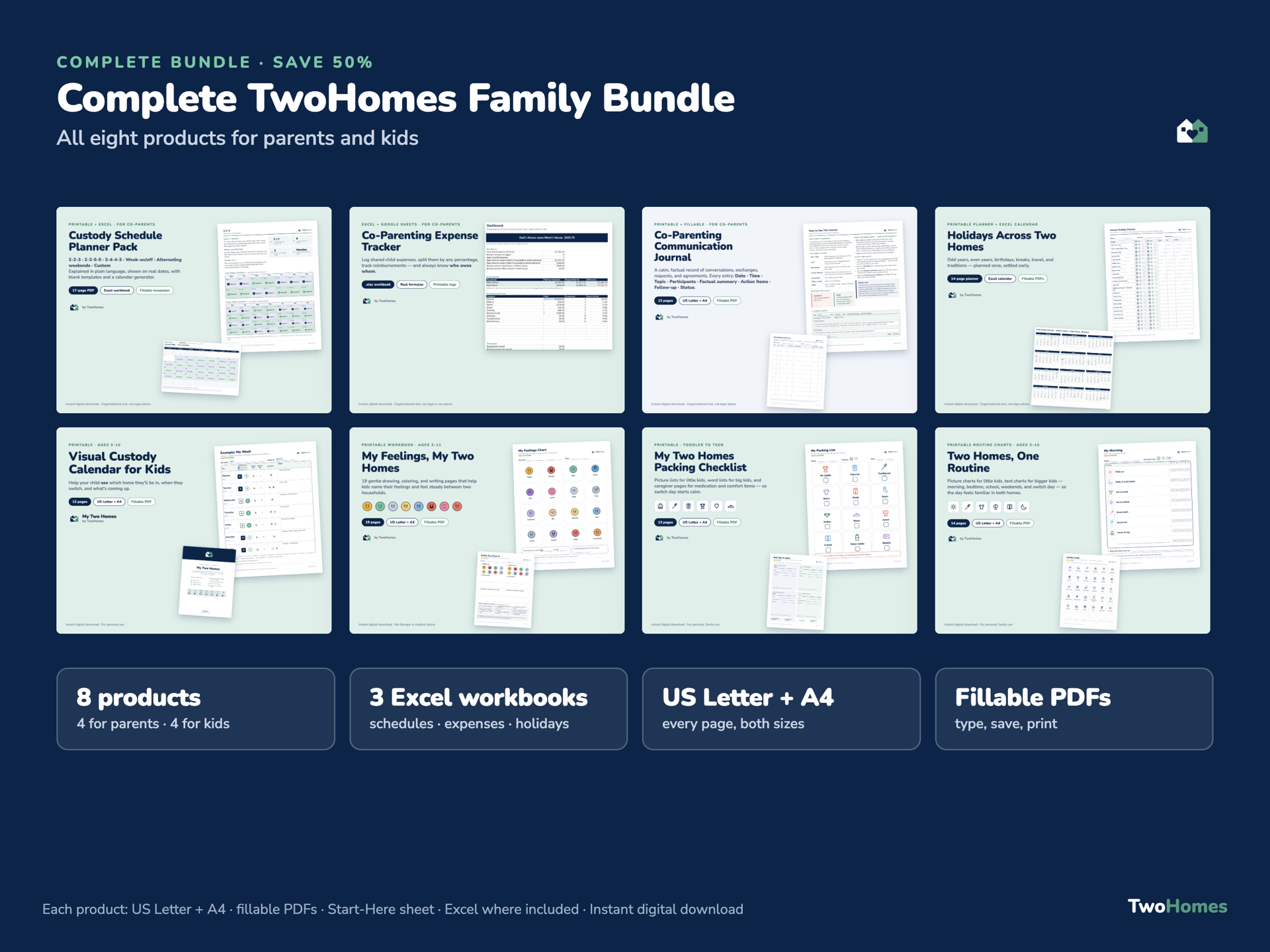 Bundle
Bundles
Complete Family Bundle
Every Two Homes Together product — the four parent planners and the four children’s resources — in a single bundle.
- Fillable PDF
- Excel
$29.99View details
You might also need
Related resources
For Kids
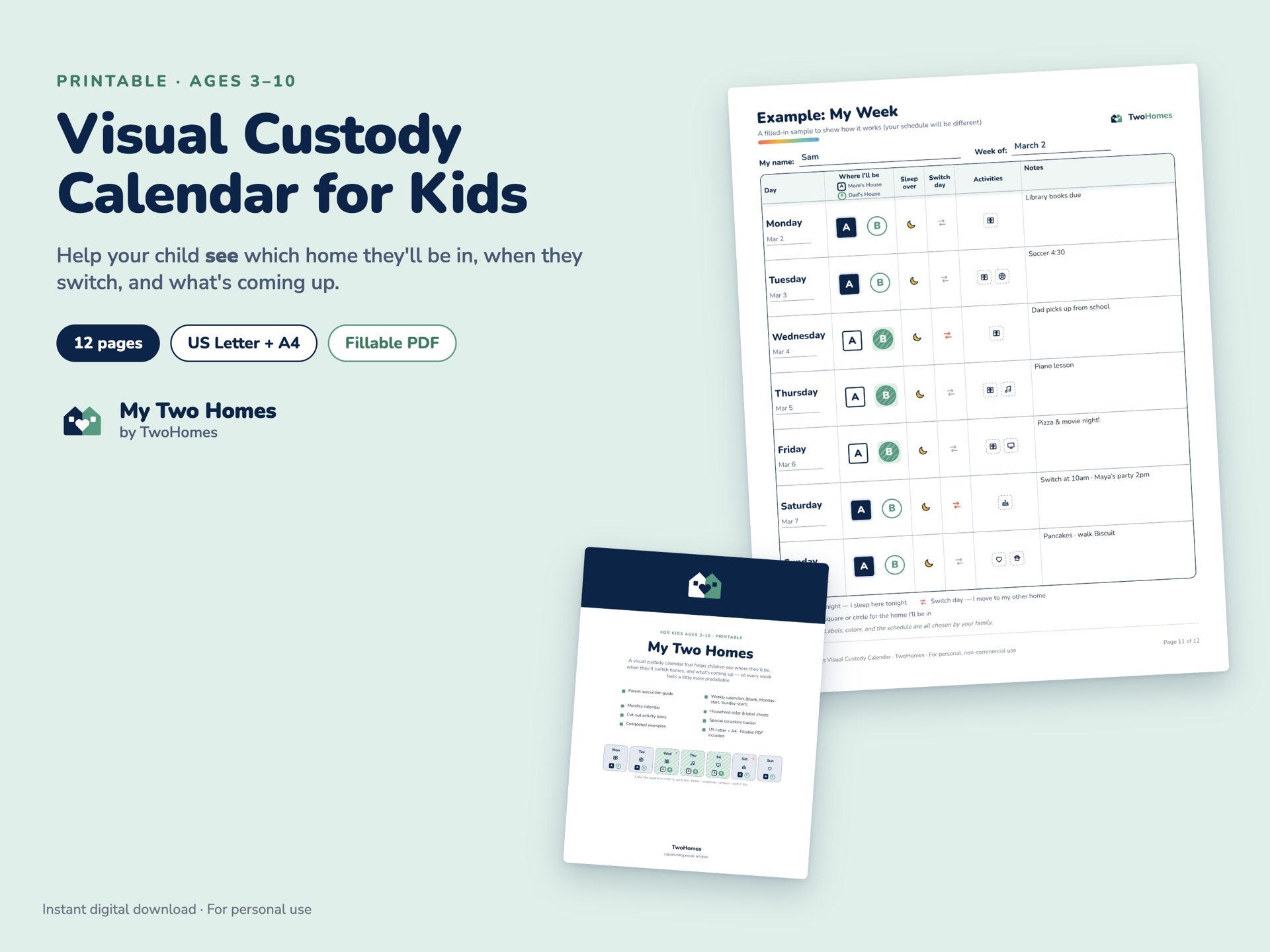
My Two Homes Visual Custody Calendar
A twelve-page printable calendar kit a child colors in themselves — weekly and monthly pages, household labels, door signs and cut-out activity icons.
- Fillable PDF
$7.99View details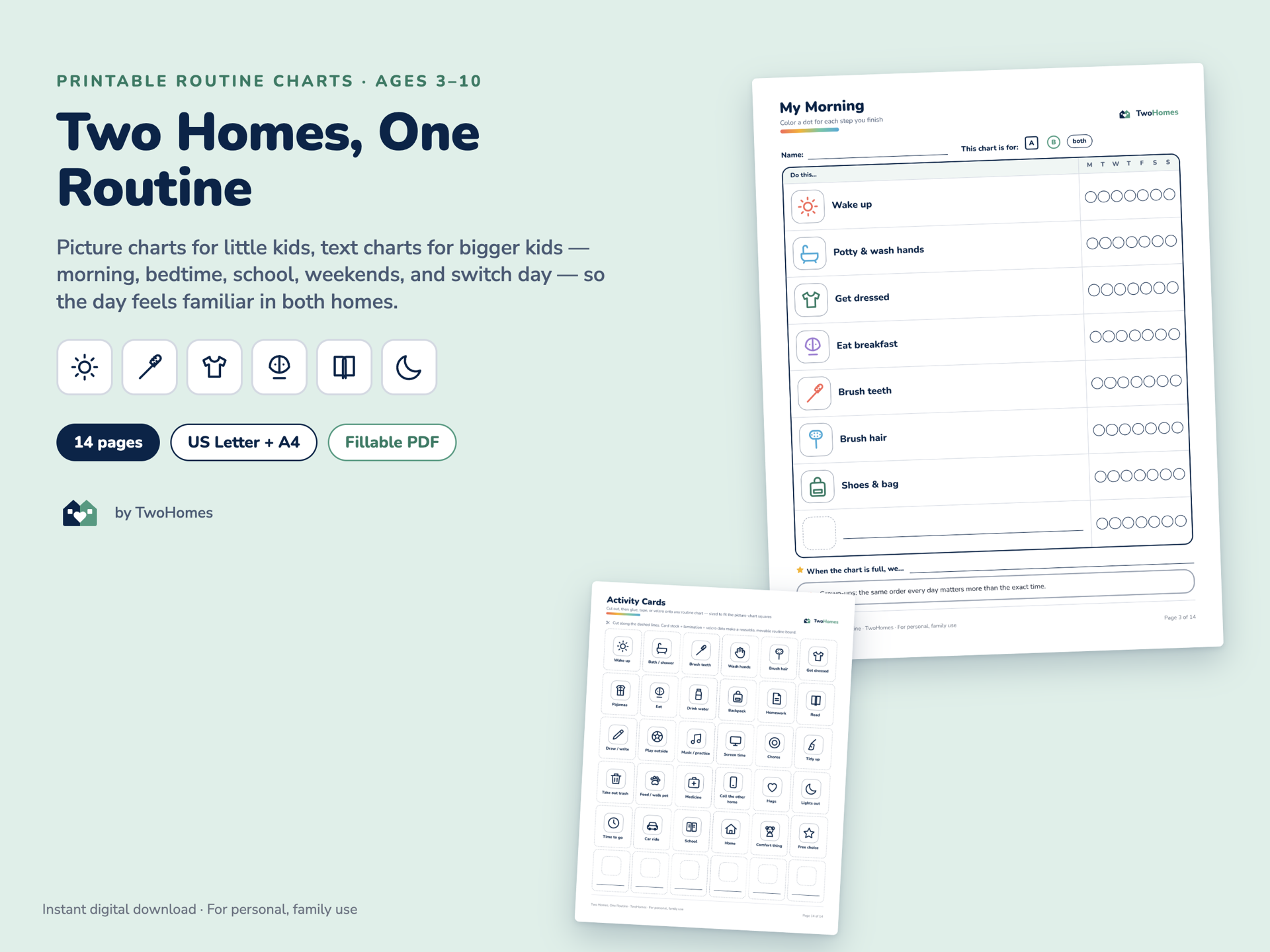
For Kids
Two Homes, One Routine
Picture and text routine charts for mornings, bedtimes, school days and switch days — plus thirty cut-out activity cards.
- Fillable PDF
$6.99View details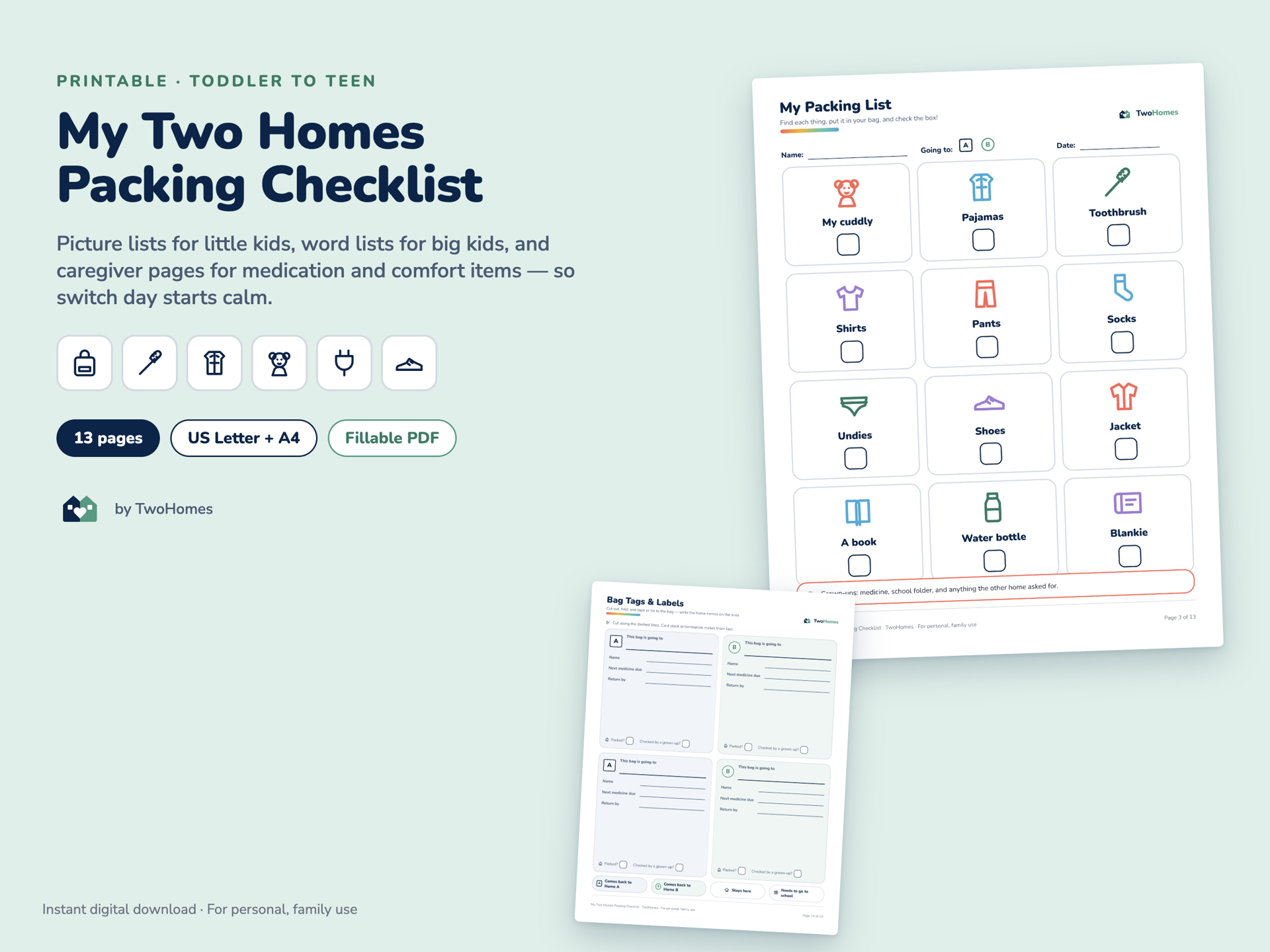
For Kids
My Two Homes Packing Checklist
Picture checklists for little kids, word checklists for big kids, and caregiver pages for the things that must not be forgotten.
- Fillable PDF
$4.99View details